
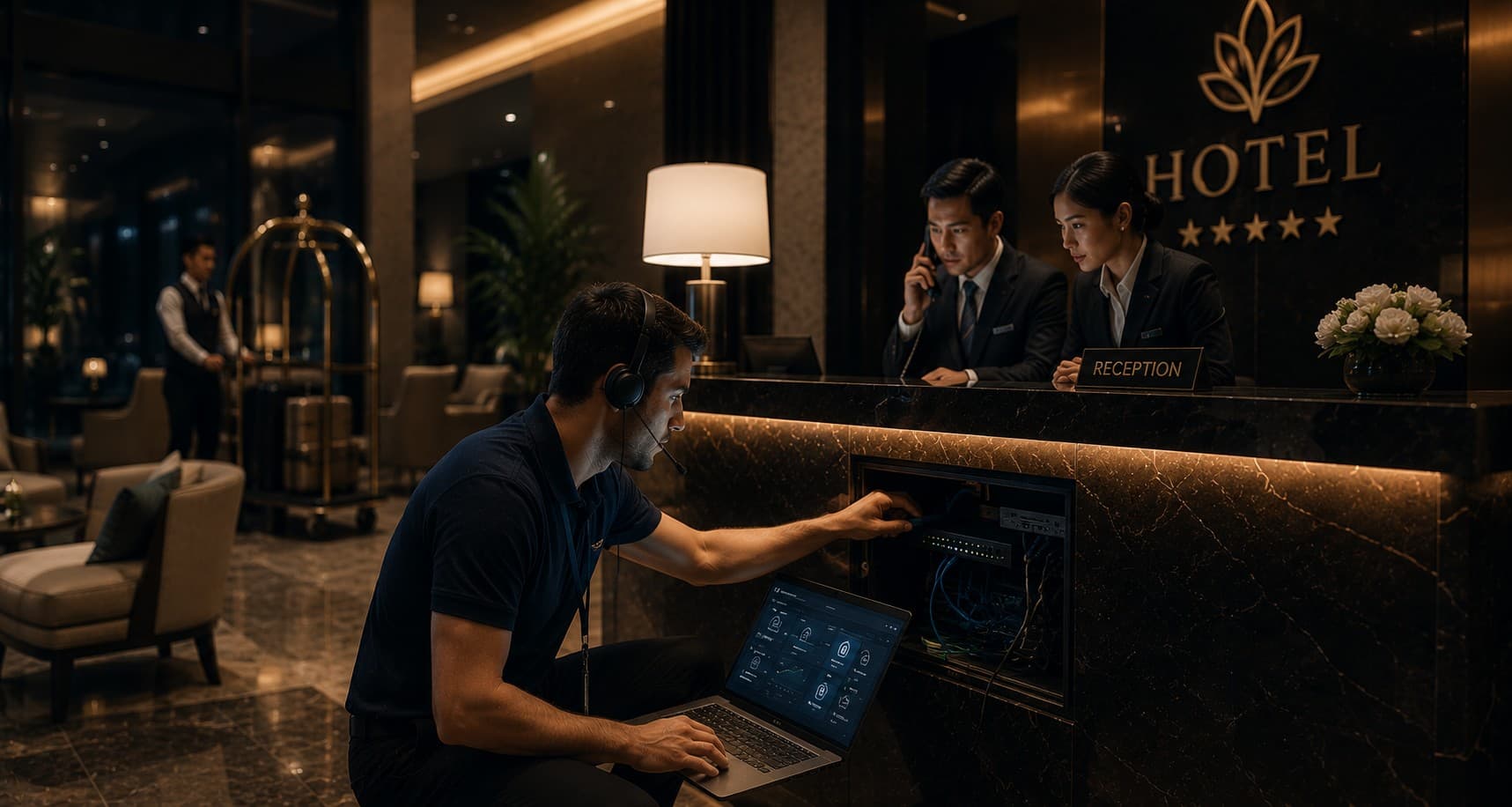
Hotel Ad-Hoc IT Support
Hotel ad-hoc IT support — experienced hospitality engineers, no long-term contract.
Emergency troubleshooting, second opinions and onsite engineering for hotels and serviced apartments — when you need experienced hospitality IT input without a managed support commitment.
The service
Hotel ad-hoc IT support — for when you need engineering input without a contract.
Not every hotel wants a managed support contract immediately. Sometimes a property needs help with a specific issue, a second technical opinion, emergency troubleshooting, short-term engineering assistance or experienced hospitality engineers during operational pressure.
The service is reactive, issue-focused and time-based. We assess the situation, gather information, review the environment as far as access allows, and do our best to help resolve or stabilise the issue. We are transparent from the beginning about what can realistically be achieved.
Ad-hoc support is sometimes the first step toward regaining operational clarity.
No support contract
Engage when you need it — no retainer, no ongoing commitment required.
Best-endeavour basis
Honest about limitations when entering unfamiliar or undocumented environments.
First 30 minutes free
An engineer discusses the issue and helps decide the practical next step before any commercial commitment.
The kinds of issues hotels contact us for
Hotel ad-hoc IT support covers a wide range of operational situations.
Guest Wi-Fi issues
Recurring complaints in a specific wing, conference Wi-Fi instability, roaming problems, bandwidth saturation, intermittent disconnects, suspected switch or AP failures. Sometimes the issue is wireless; sometimes the problem sits deeper in the switching or internet infrastructure underneath.
PMS & operational system instability
Opera or MEWS feeling unstable, integrations stopping behaving correctly, remote access failing, support between vendors becoming difficult, nobody seeming to "own" the issue operationally. We frequently help properties stabilise the situation and coordinate conversations between suppliers.
Cyber-security concerns
Suspicious activity, ransomware concerns, MFA rollout or lockout issues, firewall problems, endpoint-security uncertainty, Microsoft 365 compromise fears. The first step is usually helping management understand what is genuinely urgent, what is noise, and what the safest operational next step should be.
Infrastructure troubleshooting
Switch failures, VLAN problems, fibre issues, IPTV instability, internet failover problems, comms-room concerns, backup issues, CCTV connectivity problems. Hospitality infrastructure problems rarely stay isolated for long because so many systems share the same network underneath.
Independent second opinions
Confirmation that advice makes sense, a second engineering perspective, independent validation before spending money, or another set of experienced eyes on the situation. This is extremely common in hospitality — particularly before major supplier decisions or infrastructure investment.
How it works
Simple, transparent process — no obligation beyond the first call.
Initial call — first 30 minutes free
A hospitality engineer discusses the issue, gathers context around operational impact, urgency, supplier involvement and infrastructure — and helps the property decide the practical next step. Anything beyond this moves to paid consultation.
Commercial agreement
Before work begins, a short legal agreement covers liability limitations, access permissions, confidentiality, best-endeavour support terms and engagement scope. This protects both sides operationally.
Engagement structure agreed
Support is structured as hourly consultancy, half-day, full-day, remote troubleshooting or onsite attendance — depending on urgency, complexity, access level and likely investigation effort.
Troubleshooting & operational support
Engineers review available information, coordinate with existing suppliers where needed, attempt stabilisation or resolution, and help the property move toward the safest operational outcome possible.
Why best-endeavour
Honest about limitations — honest about what we can deliver.
Unlike a fully managed environment, ad-hoc support means we are often entering unfamiliar infrastructure, undocumented networks, restricted environments, incomplete supplier handovers or operationally fragile estates. A third-party engineer cannot guarantee full resolution without proper access, documentation and time to understand the environment properly.
Experienced hospitality engineering input
Honest communication throughout
Practical troubleshooting with operational context
Genuine effort to help the property move forward
Hospitality context
Hotels cannot tolerate delayed fixes the way an office can.
Technology failures in hospitality affect guests, reception, conferences, payments, housekeeping, restaurant operations and occupancy experience simultaneously. That operational pressure changes how troubleshooting needs to happen.
Hospitality ad-hoc support requires calm communication, prioritisation, operational judgement and understanding which issues genuinely affect the guest experience first. That context matters — and it is what separates a hospitality specialist from a generic IT contractor.
Common patterns
The situations we most commonly walk into.
Hospitality technology environments often evolve organically over years — and ad-hoc support is sometimes the first step toward regaining operational clarity.
Existing supplier relationship breaking down
Infrastructure nobody fully understands anymore
No updated network documentation anywhere
Shared admin credentials between multiple vendors
"Temporary" fixes still running years later
Unsupported firewalls or end-of-life switches
Multi-property estates with inconsistent standards
Conference or event failures during peak occupancy
Refurbishment projects creating operational instability
Why businesses contact us
Hospitality-specialist engineers
We understand the operational realities of hotels, resorts, serviced apartments and co-living environments — not generic break-fix IT.
Honest expectations
We are upfront about what can realistically be achieved, what access is required, and where limitations exist as a third-party engineer entering an unfamiliar environment.
Practical operational approach
The goal is not creating panic — it is helping the property stabilise and move forward with the least operational disruption possible.
Independent perspective
Sometimes management simply needs an experienced external engineering view without committing to a long-term arrangement immediately. That is the service.
Key benefits
Fast access to experienced engineers
Useful when operational pressure appears unexpectedly and the existing supplier is unavailable.
No long-term contract required
Engage support only when needed — no retainer, no ongoing commitment.
Independent second opinions
Helpful before major spending decisions, supplier changes or infrastructure commitments.
Flexible engagement structure
Remote, onsite, hourly, half-day or full-day depending on the situation.
Gateway into longer-term support
Some engagements remain one-off calls. Others evolve into managed support, consultancy or infrastructure projects — the property decides.
FAQ
Hotel ad-hoc IT support — questions we get asked.
No. This service exists specifically for properties without ongoing contracts. You contact us, we discuss the issue, and we work out the most practical structure from there.
The first 30 minutes are free — a hospitality engineer reviews the issue, gathers initial context and helps the property decide the practical next step. Anything beyond that moves to paid consultation.
Yes. In many cases we coordinate directly with incumbent suppliers where required — particularly where the issue sits between multiple parties and nobody is taking ownership.
No — and we are transparent about that. Ad-hoc support operates on a best-endeavour basis because we are often entering unfamiliar or restricted environments without full visibility. What we guarantee is honest communication, experienced engineering input and genuine effort to help the property move forward.
Yes, depending on location, urgency and engineer availability. Many issues can be partially assessed remotely first to determine whether onsite attendance is genuinely necessary.
Typically hourly, half-day, full-day, remote consultancy or onsite engineering — depending on the complexity and urgency of the situation.
We explain the situation honestly and recommend the most practical operational next step — whether that involves further investigation, project work or coordination with the existing supplier.
Need experienced hospitality IT support right now?
Contact Pacific and speak directly with one of our hospitality engineers. No obligation, no pressure — just practical hospitality IT support on a best-endeavour basis. The first 30 minutes are free.
Speak to an engineer →