
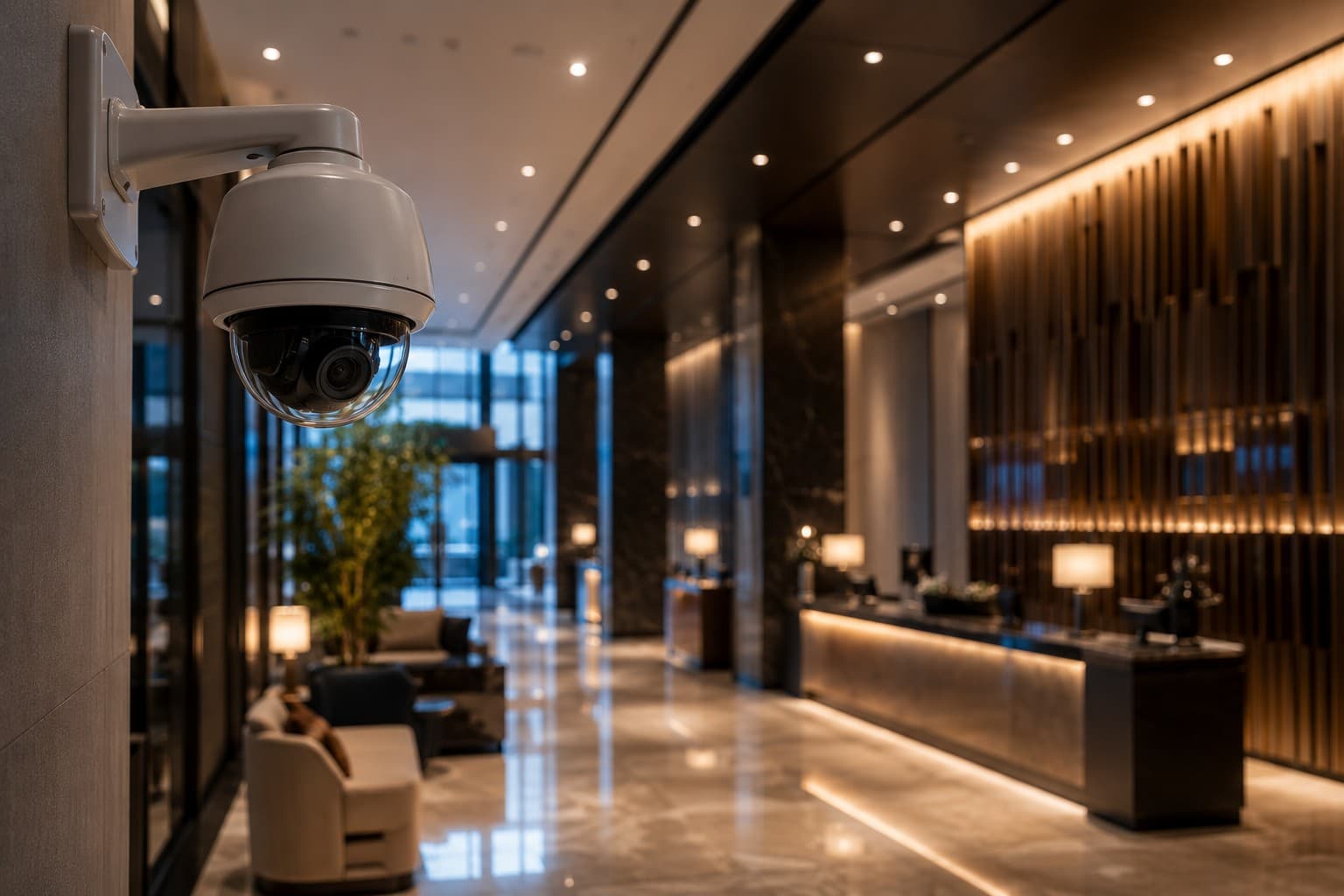
Hotel CCTV Solutions
Hospitality CCTV designed for operational visibility — not cameras for the sake of it.
Hikvision as primary, Axis, Hanwha and Bosch where required. Integrated into network infrastructure, with retention planning, remote monitoring and analytics capability built in.
The hospitality context
CCTV in hospitality is about operational awareness, not just recording.
Hotels operate 24×7 with constant public access, multiple entrances, guest movement, deliveries, contractors and operational pressure at all hours. CCTV becomes part of day-to-day management, incident investigation, liability protection and overall security strategy.
The goal is not maximum cameras everywhere. It is useful coverage, sensible retention, operational visibility and reliable evidence when required — without making the environment feel intrusive to guests.
CCTV only becomes valuable if the footage actually exists and is usable when needed.
Typical coverage areas
- Reception and lobby areas
- Entrances and exits
- Corridors and lift lobbies
- Loading bays and service areas
- Car parks and external perimeter
- Back-of-house and comms rooms
- Bars, restaurants and conference spaces
- Staff entrances and restricted areas
Platforms
Platform choice follows the requirement, not vendor habit.
Hikvision
Primary platformStrong camera ecosystem, flexible deployment options, centralised management, analytics capability and competitive cost across larger estates. Our primary choice across many hospitality environments.
Axis
Enterprise alternativeAxis cameras for properties where specification, group policy or brand standards require a premium enterprise platform — particularly luxury hotels and multi-national groups.
Hanwha
Enterprise alternativeHanwha Vision cameras deployed where property specification, group procurement frameworks or design requirements call for an alternative to Hikvision as the primary platform.
Bosch
Large estatesBosch video security for large hospitality estates, conference-led properties and developments where integration with wider Bosch building-management infrastructure is required.
Infrastructure design
Modern CCTV is an infrastructure problem first.
Poorly planned CCTV infrastructure creates packet loss, recording failures, unstable streams and unreliable footage — particularly inside large hospitality environments.
PoE switching
Dedicated PoE infrastructure sized for camera count and future expansion.
CCTV VLANs
Camera traffic isolated from guest, operational and staff networks.
Storage sizing
NVR storage planned around retention policy, resolution and camera count.
Bandwidth planning
Camera stream bandwidth modelled against uplink and switching capacity.
Fibre uplinks
Reliable fibre connectivity between comms rooms and NVR infrastructure.
Secure remote access
Role-based remote monitoring with governance controls applied.
Analytics capability
More than passive recording.
Modern hospitality CCTV platforms can provide operational intelligence beyond footage capture — where it genuinely adds value without making the property feel intrusive.
Motion analytics
Intelligent motion detection reducing false alerts.
Intrusion detection
Line-crossing and perimeter-zone alerts for restricted areas.
People counting
Occupancy visibility for lobbies, conference spaces and public areas.
ANPR integration
Automatic number-plate recognition for car parks and service areas.
Perimeter alerts
After-hours activity detection across external areas.
Common patterns
The CCTV problems we most commonly inherit.
Most hospitality CCTV problems are planning and infrastructure problems first — not camera problems.
Poor camera positioning with blind spots near entrances
Inadequate night visibility — footage unusable in dark conditions
Cameras installed for aesthetics rather than operational coverage
CCTV sitting on the same flat LAN as guest and operational systems
Storage severely undersized — footage overwriting within days
No retention planning — recordings unavailable when incidents occur
Unsecured remote access with weak credentials
Unsupported firmware — months behind on security patches
Low-quality footage unusable for incident investigation
"Temporary" camera installations still active years later
FAQ
Hotel CCTV — questions we get asked.
Hikvision is our primary platform across many hospitality environments because of its camera ecosystem, management capability and cost-effectiveness at scale. Where a property's specification, group policy or guest profile requires an alternative, we deploy Axis, Hanwha or Bosch. Platform selection follows the requirement.
Yes — and it should. CCTV ideally sits on a dedicated VLAN, uses dedicated PoE switching and integrates properly with access control, alarms and the wider security environment rather than being an isolated system nobody manages.
Retention depends on operational policy, legal requirements, insurer expectations and storage capacity. Many hospitality environments need 30–90 days minimum. We help plan storage sizing, frame rates and archive policies upfront rather than discovering the limits during an incident.
Yes. Secure remote monitoring, multi-site visibility and management access can be configured — with proper access control, role-based permissions and governance in place. Uncontrolled remote access creates its own security risks.
Absolutely — particularly inside larger hospitality environments. Poorly planned CCTV on shared networks can cause packet loss, unstable streams and recording failures. That's why we treat CCTV as an infrastructure problem, not just a camera placement problem.
Yes. CCTV planning during design and construction is significantly more effective than retrofitting later. We engage during early RIBA stages to ensure camera positions, cable routes, PoE switching, storage and comms-room design are all coordinated with the build programme.
Want an honest review of your current CCTV environment?
A senior hospitality engineer visits the property, reviews the CCTV and surveillance infrastructure, and gives you a written summary of where the coverage, storage and security posture may need attention.
Book a free Gap Analysis →